01. In-Depth Standalone Game Guides
Explore our specialized long-form strategy manuals for the three most prominent table games featured across global casino hotel resorts:
STANDALONE GUIDE · 8 MIN READ
Blackjack Rules That Change the Odds
A deep-dive investigation into how small rule adjustments on table placards, including 3:2 versus 6:5 payouts, dealer hitting soft 17, late surrender, and doubling restrictions, compound the casino house edge.
STANDALONE GUIDE · 10 MIN READ
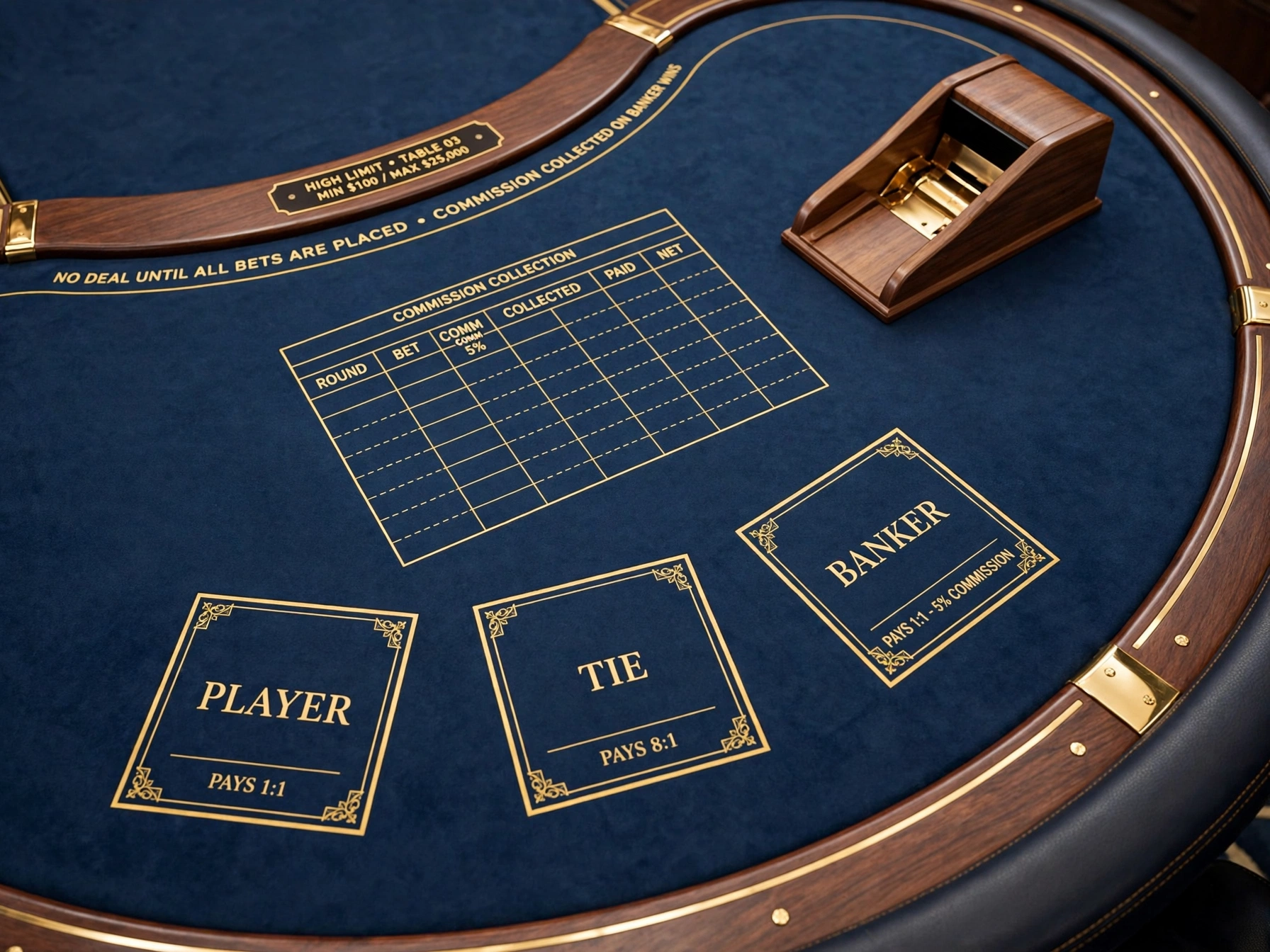
Baccarat Rules Explained
An authoritative guide to the premier game of Macao and Las Vegas VIP salons. Covers the third-card tableau drawing rules, the 5% banker commission, no-commission variants, and why tie bets are mathematical traps.
STANDALONE GUIDE · 7 MIN READ
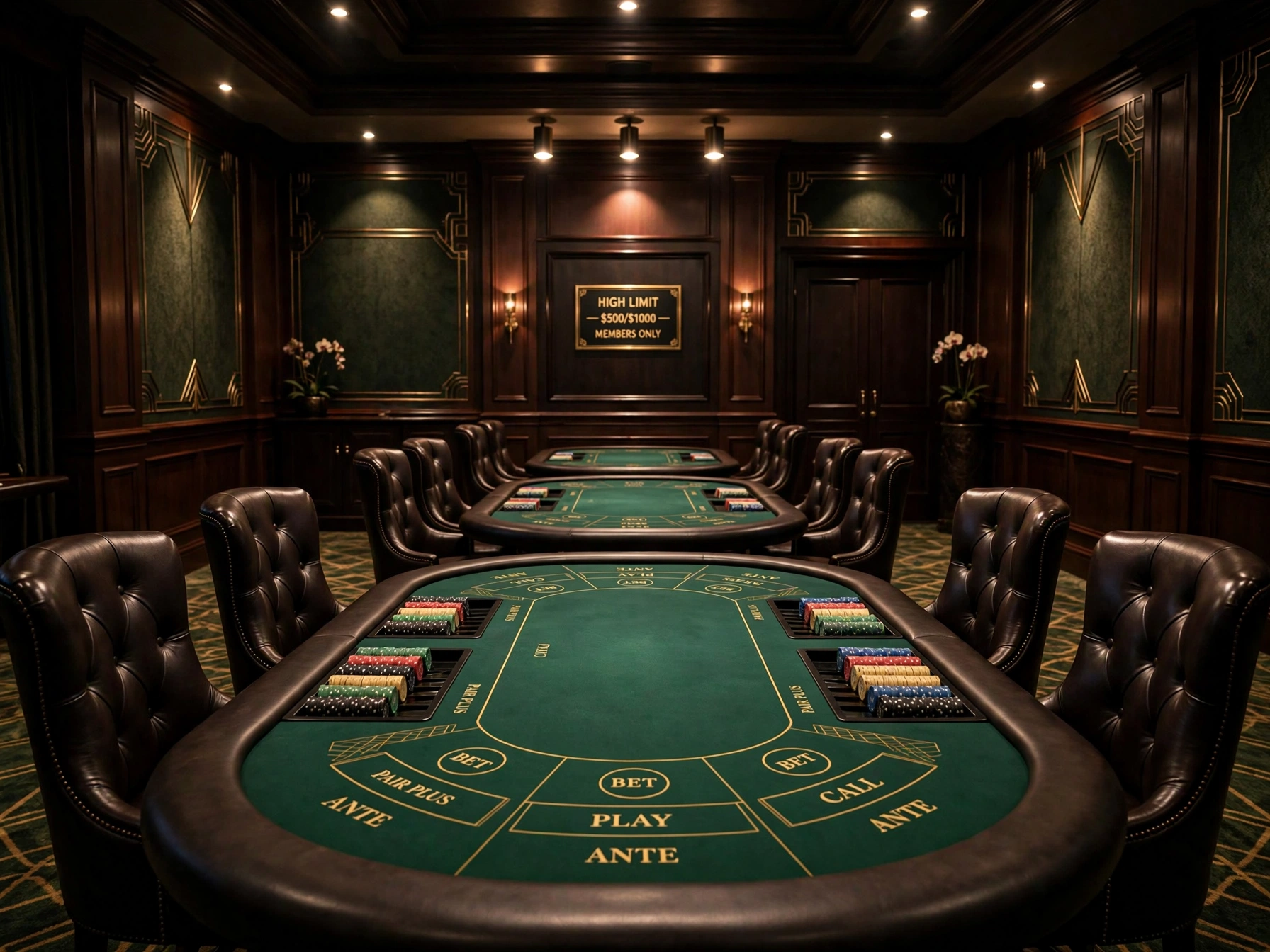
First Visit to a Casino Poker Room
Cardroom procedures explained for players transitioning from home or online play to live resort poker. Details buy-in podiums, table stakes, house rake caps, tipping etiquette, and verbal declaration rules.
02. Craps Table Fundamentals & Odds Bets
Craps is frequently the most energetic pit on any casino floor, driven by shared dice rolls and vocal participation. While the layout appears complex with dozens of betting boxes, disciplined craps play centers on a tiny handful of wagers that offer some of the lowest mathematical house edges in the casino.
The Pass Line: Wagered before the "come-out" roll. A roll of 7 or 11 wins even money immediately; a roll of 2, 3, or 12 (craps) loses. Any other number becomes the "point." Once a point is established, the shooter must re-roll the point number before rolling a 7 to win. The house edge on the Pass Line is a modest 1.41%.
Taking Free Odds: The single most advantageous bet in a casino. Once a point is established, Pass Line bettors can place an additional "odds" wager behind their bet. The casino pays true mathematical odds on this supplementary bet with zero house advantage (0.00% edge). Premier Las Vegas resorts commonly permit 3x-4x-5x odds (or higher in select downtown venues), drastically diluting the blended house edge down to under 0.40%.
Wagers to Avoid: Center-table proposition bets, such as Any 7 (16.67% edge), Hardways (9.09% to 11.11% edge), and Horn bets (12.50% edge), carry exorbitant house penalties and deplete bankrolls rapidly.
03. European vs American Roulette Odds
Roulette is a pure game of independent trials where no past result influences the next spin. However, the physical architecture of the wheel dictates your long-term expected return.
European Roulette (Single Zero): The wheel contains 37 numbered pockets (numbers 1 through 36 plus a single green 0). Straight-up winning bets pay 35 to 1. Because the wheel has 37 outcomes, the house edge is 1/37, or approximately 2.70%. This wheel is standard across Europe, Asia, and high-limit salons on the Las Vegas Strip.
American Roulette (Double Zero): The wheel contains 38 pockets (1 through 36, plus green 0 and green 00). Payouts remain identical at 35 to 1, but the additional pocket nearly doubles the house edge to 2/38, or 5.26%.
Triple-Zero Warning: Many Las Vegas Strip casinos now place triple-zero roulette wheels on primary walkways. Featuring green 0, 00, and a casino logo pocket (39 total outcomes), the house edge leaps to an unacceptable 7.69%. Discerning players should walk past triple-zero layouts entirely.
04. Slot Machine Mechanics & RTP Volatility
Modern casino resort slot machines are computer terminals governed by certified Random Number Generators (RNGs). Understanding the mathematical parameters of slot play prevents costly misconceptions:
- Return to Player (RTP): The theoretical percentage of total wagered money returned to players over hundreds of thousands of spins. In Nevada, statutory minimum payback is 75%, but major Strip resorts typically configure machines between 88% and 94% on penny slots, climbing to 94% to 97% on five-dollar and twenty-five-dollar high-denomination reels.
- Volatility: High-volatility machines award infrequent payouts with massive top jackpot potential, requiring a deep bankroll to withstand long dry streaks. Low-volatility machines generate frequent small payouts that extend session time.
- The "Hot Machine" Fallacy: Every spin is an independent event determined at the exact millisecond the spin button is depressed. A machine that has not paid a bonus round for hours has the exact same probability of paying on the next spin as a machine that just hit a jackpot.
05. Universal Casino Floor Etiquette
Maintaining proper decorum on the casino floor ensures smooth game flow and mutual respect with dealers and fellow players:
- Cash on the Felt: Never attempt to hand cash directly to a dealer. Place cash flat on the table felt outside the betting circle. Dealers are required by regulatory surveillance protocols to spread bills flat for overhead cameras before converting cash into gaming chips.
- Hand Gestures in Blackjack: At shoe-dealt games where cards are dealt face up, never touch the cards. Use unambiguous hand signals for overhead cameras: tap the felt for a hit, wave a flat hand over cards to stand, point a single finger to double down, or separate fingers to split.
- Coloring Up: When preparing to leave a table, wait until the conclusion of a round and request the dealer to "color up" your chips. This consolidates low-denomination chips into higher-value plaques, simplifying transport to the main cashier cage.
- Tipping Dealers: In North American casinos, tipping (toking) dealers is customary. You may place a chip on the betting line in front of your wager as a companion bet for the dealer, or hand the tip to the dealer between hands with a polite acknowledgment.